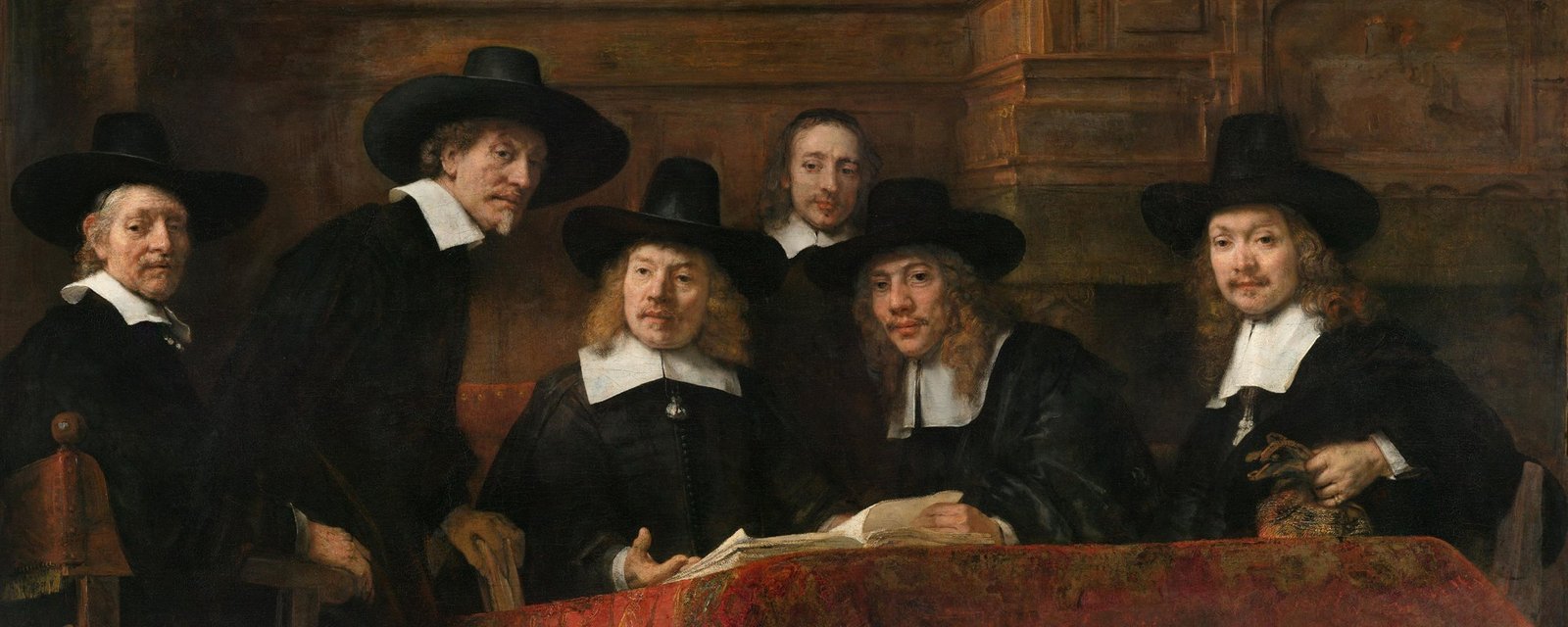
Rembrandt van Rijn, The Sampling Officials of the Amsterdam Drapers’ Guild, Known as ‘The Syndics’, 1662. Oil on canvas. Rijksmuseum, Amsterdam, SK-C-6, on loan from the City of Amsterdam. Public domain.
The agent proposes. The factory decides.
Good morning.
This week’s bookmarks kept asking one question: if agents are going to do real work, where does the yes live? Every good answer put it outside the agent.
On the cover, the cloth guild’s quality officers sit with the sample book open. Other hands made the cloth. The guild decides what passes. That is the week.
1. Agent proposes. Policy authorizes. Infrastructure enforces.
A new reference architecture for secure software factories starts from the security team’s bind: developers want coding agents wired into tickets, email, and chat, and a vague “gateway” doesn’t stop data leaking out or a hijacked credential. Its answer is one clean sentence. The agent proposes, policy authorizes, infrastructure enforces, across four boundaries (sandbox, network, supply chain, identity) and three levels of autonomy.
Same idea at desk scale: Danielle Morrill’s eight agents merge, release, and verify deploys without her typing a password for a month. A read-only service account per machine, scoped vaults, and a local cache so secrets never land in a transcript. Her best rule: verify each credential by using it, because the setup mistakes all exit cleanly.
Danielle Morrill · the write-up
2. Light factories count. Reliability picks the harness.
Software Factories for Skeptics makes the case for “light” factories. Humans stay in planning and review; the value is the shared system around the agents: one view across sessions, the factory’s prompts, checks, and human gates kept in a repo, and a loop that improves the factory from its own data. A team that switched coding agents got the sharpest reply of the week: people switch when the old harness keeps breaking, not over benchmarks. And the cheapest factory fix going: cache your CI dependencies, 20 minutes down to 3.
Josh Rosen · Myles Snider · Daniel Lockyer
Underneath it, the big discount on intelligence: one team found the API cost about 30 times their subscriptions. Enjoy the subsidy, and own your decision logs.
3. Your ask sets the ceiling.
Felix Rieseberg’s tutorial on ambition asks for the outcome beyond the task (“keep our apps crash-free,” not “fix this crash”), the raw data a top professional would use, and a judge other than you or the model. His example turns a quarterly deck into an early-warning system, backtested. Nate Berkopec’s power phrases say it in one line: “Give me irrefutable proof this works now.” The most-installed skill in Matt Pocock’s repo is one line that tells the agent to grill you about your plan.
Felix Rieseberg · Nate Berkopec · grill-me
The ask raises the ceiling. The factory holds the floor.
Try this
- Pick one agent action that can change something real. Write down who proposes it, what policy authorizes it, and what outside the agent enforces it.
- Take secrets out of prompts: one scoped, read-only account per machine, verified by an actual call.
- Before your next big task, ask the model what a top professional would do that you didn’t ask for. Then ask for proof.
Ask the agent for more. Let the factory say yes. Coffee’s on.